

How to Use a Chemical Fume Hood: Sash, Setup and Safe Work
Last updated November 2026 · LORDERAN how-to guide
Short answer: switch the fan on and let it run at least five minutes, open the sash only to its operating height and keep it below your face. Work at least 6 inches behind the sash, raise bulky equipment 2 inches off the work surface, keep the baffle slots clear and never store chemicals in the hood. Close the sash whenever you step away, and have the hood tested at least once a year. This guide follows OSHA's fume hood QuickFacts, with figures from the LORDERAN ducted fume hood manuals.
1. Before the first use
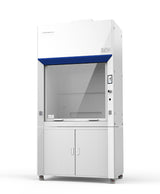
A ducted hood is only as good as its exhaust. It pulls room air in across the sash opening and sends it, with the vapors, outdoors.
-
1Away from doors and trafficNot facing a busy walkway, an entrance or a door, and not in a corner. Drafts at the opening disturb the airflow.
-
2Duct to open airThe exhaust duct clamps to the outlet on top of the hood and must end outdoors, in the open air.
-
3Room conditionsIndoors, 15 to 35 °C (59 to 95 °F), no more than 75 %RH, on a grounded supply.
-
4Keep the front clearNo other equipment within 150 mm (6 in) of the front window.
-
5Know what it is rated forThe X series manual rules out flammable or explosive substances and strong acids or bases. For strong acids and alkalis, the P series has a polypropylene work area. Read the manual for your model.
2. Keep vapors moving away
Air enters at the sash, sweeps across the work and leaves through the baffle slots at the back. A raised sash, your head in the opening or clutter against the baffle lets vapors roll forward toward you.
Sash low, work set back
The sash stays below your face; nothing blocks the baffle.
Sash high, head in, baffle blocked
Bulky items near the back and a body leaning in.
3. Set up the work zone
-
16 inches backKeep all materials at least 6 in (15 cm) inside the sash opening. A strip of tape on the work surface makes the line easy to see.
-
2Raise large equipmentLift bulky items such as a centrifuge at least 2 in (5 cm) off the base so air can pass underneath.
-
3Baffle slots clearNothing may block the airflow through the baffles or their exhaust slots.
-
4No storageDo not keep chemicals in the hood permanently. Bring in only what the procedure needs.
-
5No loose paperTissue and other light material can be pulled into the exhaust.
4. A work session, step by step
Know the hazards of what you are handling from its Safety Data Sheet, and wear eye protection. The LORDERAN hoods hold an inflow of 0.3 to 0.8 m/s (60 to 160 fpm) at the opening.
Before
-
1Power onMain switch under the work zone, then POWER on the panel.
-
2Sash up to its markRaise it with UP or the foot switch only to the operating height, never wide open. The X series opens to at most 520 mm (20.5 in).
-
3Fan on, wait 5 minutesPress FAN and let it run at least five minutes before you start. Check the airflow reading if your hood has one.
During
-
1Head outsideNever let your head enter the plane of the opening; keep the sash below your face.
-
2Work slowlyFast movements and people walking past pull vapor out of the opening.
-
3Fan speedAdjustable from F1 to F9. Keep the setting your lab tested the hood at.
After
-
1Close containersAnd switch off equipment inside the hood.
-
2Wipe downClean the work surface; see the cleaning notes below.
-
3Sash downSwitch off fan and light and lower the sash fully. Close it whenever you are not working at the hood.
Troubleshooting
Cut all power before any repair, and leave electrical work to trained technicians. A hood that is not working properly is closed, tagged and taken out of service.
Cleaning and testing
Use soap and warm water for routine cleaning, and 70 % alcohol or a disinfectant that does not attack 304 stainless steel where needed. Keep the sash glass away from hydrofluoric acid. The manuals call for full maintenance every year or 1,000 working hours.
Manuals and guides
Each LORDERAN fume hood series has a user manual and a service manual.
Questions
How high should the sash be?
At the operating height marked on the hood, and always below your face. Close it fully when you are not working at the hood.
Why 6 inches inside?
Close to the opening, the air curtain is easily disturbed by your body and by room drafts. OSHA's guidance is to keep all materials at least six inches from the sash opening.
Can I store chemicals in the hood?
Not permanently: OSHA says not to, and stored bottles block the airflow. Bring in what you need and take it back out.
Can I use flammable solvents?
Check your model's manual. The LORDERAN X series manual rules out flammable or explosive substances and strong acids or bases. Ask us which hood fits your chemicals before you order.
Is a fume hood the same as a biosafety cabinet?
No. A fume hood exhausts chemical vapors outdoors and does not filter the air for sterile work; a biosafety cabinet filters air to protect you and the sample from biological agents. See our biosafety cabinet guide.
How often should the hood be tested?
The LORDERAN manuals call for a performance test every year or 1,000 working hours, and most US labs test every hood at least once a year.