

How to Choose an Environmental Test Chamber: Climate, Rapid Change or Thermal Shock
Short answer: start from what your test method asks for. A climate chamber holds steady cold, dry heat or damp heat and ramps slowly. A rapid temperature change chamber is for tests that set a ramp rate, such as 5, 10 or 15 °C per minute. A two-zone thermal shock chamber is for tests that set a transfer time, moving the sample between a hot and a cold zone in seconds. Then check temperature range, humidity, size and what the site has to supply.
What each test needs
IEC 60068-2-14 separates change-of-temperature tests by how the change is made. Test Na is a rapid change of temperature with a prescribed time of transfer. Test Nb is a change of temperature with a specified rate of change. Steady-state tests for cold, dry heat and damp heat sit in other parts of IEC 60068.
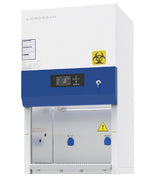
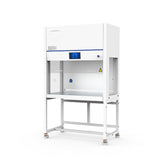
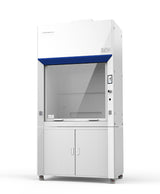
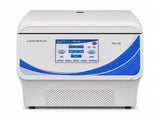
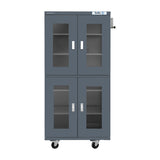
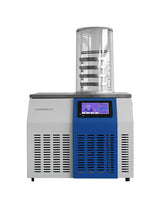
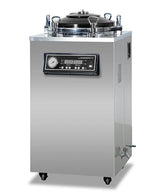
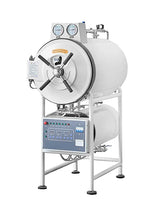
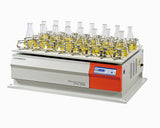
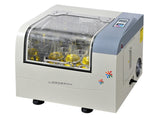
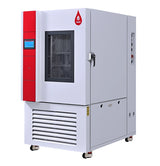
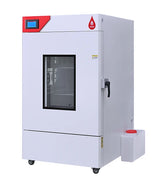
Capabilities of the LORDERAN JS4 and JS6 climate chambers, KB6 rapid temperature change chamber and two-zone thermal shock chamber.
How each chamber works
A climate chamber and a rapid change chamber both condition the air around a sample that stays put. The difference is how much heating and refrigeration power they have. A thermal shock chamber keeps two zones at their set points and moves the sample between them in a basket.
Climate chamber
Air passes a heater, a cooling coil and a humidifier behind the back wall.
The JS4 runs −40 to 150 °C and the JS6 −70 to 150 °C, both 20 to 98 %RH, with ±0.5 °C fluctuation once stable. Heating averages 2 to 3 °C/min and cooling 0.7 to 1 °C/min.
Rapid temperature change
The same layout with far more heating and refrigeration power.
At 15 °C/min the KB6 crosses the full −70 to +150 °C span in about 15 minutes. These are non-linear averages with no load; a heavy or high-mass sample slows the ramp.
Two-zone thermal shock
A basket carries the sample between a hot zone and a cold zone.
Each zone is back at its set point within 5 minutes of a transfer, for example +150 °C to −55 °C. The chamber has no humidity control and needs three-phase power and compressed air.
How fast the temperature moves
Ramp rate decides how many cycles fit into a test day and how hard each cycle stresses solder joints, packages and seals. A climate chamber is built to hold conditions precisely, so it ramps slowly. A rapid change chamber is built for speed, and a thermal shock chamber skips the ramp altogether.
Check the rate your standard or customer specification calls for, and whether it is measured in the air or on the sample.
Time to go from −40 °C to +125 °C
Calculated from the listed average heating rates, no load. Real samples take longer.
Bars share one scale, starting at zero. The climate chamber bar shows the slower end of its range.
Side by side
A three-question check
LORDERAN prices from, as of November 2026, with free delivery and duties paid to your loading dock.
LORDERAN environmental test chambers
Two climate chambers, a rapid temperature change chamber and a two-zone thermal shock chamber. The climate and rapid change chambers are programmable on a 7-inch touch screen and refill their humidifier from a closed water loop, so they need no water line. See the full range of environmental test chambers.

- −40 to 150 °C, 20 to 98 %RH
- 100, 250, 500, 1000 L
- ±0.5 °C fluctuation
- −70 to 150 °C, 20 to 98 %RH
- Two-stage cascade cooling
- 100, 250, 500, 1000 L
- 5, 10 or 15 °C/min
- −70 to 150 °C, 20 to 98 %RH
- Air- or water-cooled

- Transfer in 15 s or less
- +60 to +200 / −10 to −65 °C
- 50, 100 and 200 L
Questions buyers ask
Can a climate chamber run a thermal shock test?
Not one that sets a transfer time. A climate chamber heats at 2 to 3 °C/min and cools at 0.7 to 1 °C/min, so a swing from −40 to +125 °C takes about an hour. Thermal shock under IEC 60068-2-14 Test Na prescribes a transfer time, which a two-zone chamber meets by moving the sample in 15 seconds or less.
What humidity can I reach, and at what temperature?
On the JS4 and JS6, 98 %RH is available from 20 to 70 °C, easing to 90 %RH at 90 °C. The standard lower limit is 20 %RH from 45 to 90 °C. Drier or cooler points need the optional low-humidity function, and outside 10 to 90 °C the chamber controls temperature only.
How big a chamber do I need?
Keep the samples to about three quarters of the workspace, with gaps between them so the air can reach every side. Heavy or high-mass loads also slow the ramp, so allow for them when you choose a rate.
What does the site need to supply?
The climate and rapid change chambers use RO or DI water in a built-in tank, so no water line is needed; the JS4 calls for 5 µS/cm or less. The 100 and 250 L climate chambers run on 208 to 240 V single-phase; larger sizes and all rapid change and thermal shock chambers need three-phase power. Thermal shock also needs compressed air, and some sizes need a chiller.
Is a faster ramp always better?
No. The rate should match your test specification. A faster chamber costs more, draws more power and may need water cooling. Order the rate your standard or customer calls for.